






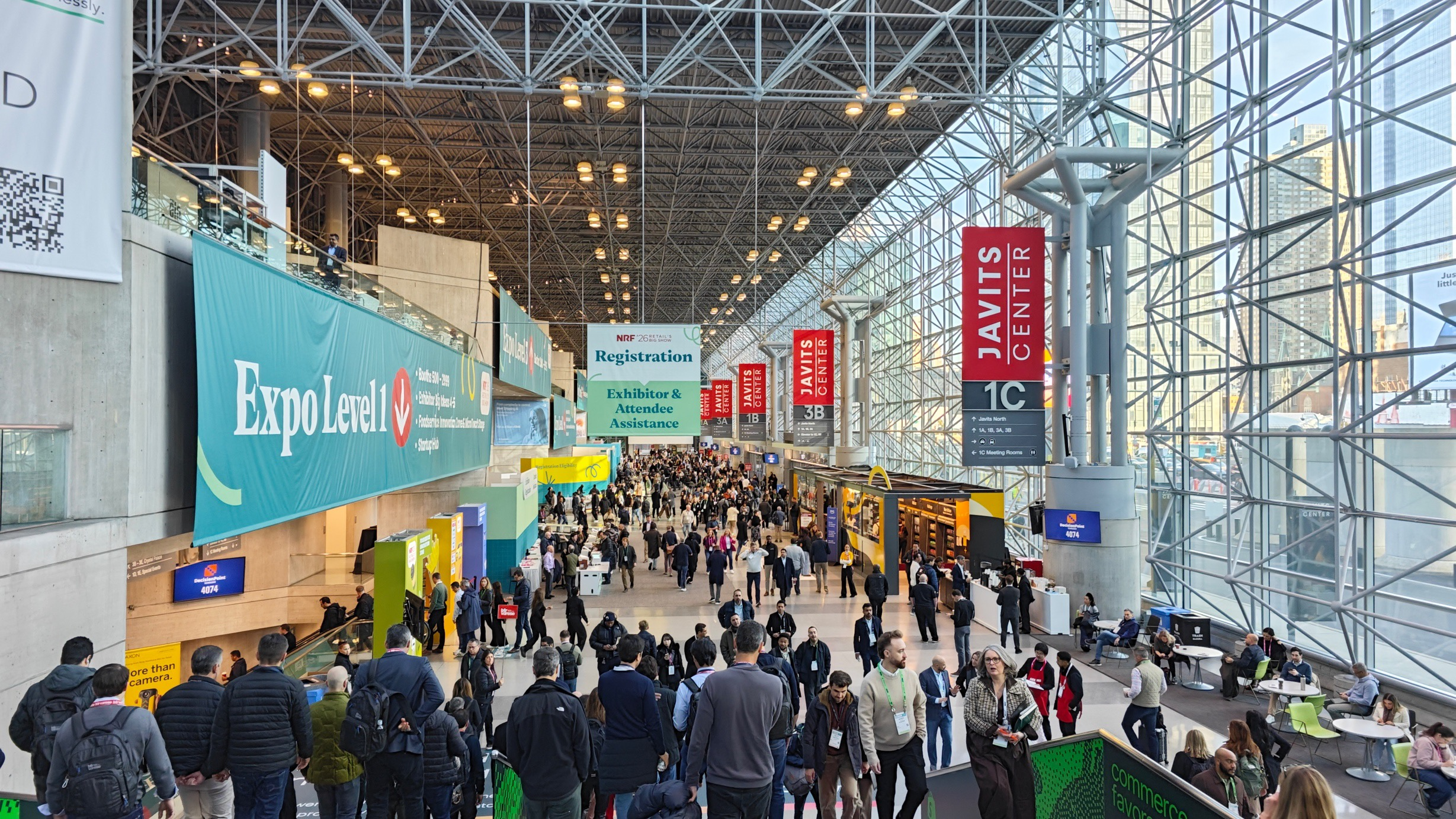
In January 2026, the global tech industry is turning its attention to two major exhibitions in the US — the CES in Las Vegas from January 6 to 9, and the NRF New York Retail Big Show from January 11 to 13.
Two grand events were held back-to-back, with 30 and 25 e-paper-related enterprises respectively making appearances, fully showcasing technological innovations and scenario implementation outcomes from the consumer end to the commercial end, and clearly outlining the e-paper industry "Technological maturity, scenario diversification, and ecosystem collaboration" development blueprint further highlights the core leading position of Chinese enterprises in the global industrial chain.
Exhibitor Landscape: Chinese Players Take the Lead Globally, Highlighting the Edge of Industrial Clusters
In the e-paper exhibition areas of the two exhibitions, there were"Chinese companies take the lead, with a concentrated geographical distribution" is a distinct feature that confirms China's absolute advantage in the field of e-paper hardware manufacturing.
At CES 2026, there are a total of 30 exhibitors related to electronic paper (including electrochromic and cholesteric liquid crystal products), among which 17 are mainland Chinese enterprises, accounting for a high proportion of 57% and serving as the core support for innovation; there are 6 local US enterprises (20%) and 4 European enterprises. Notably, 28 exhibitors adopt E Ink electronic paper technology, accounting for 93%, indicating a highly concentrated technology route.
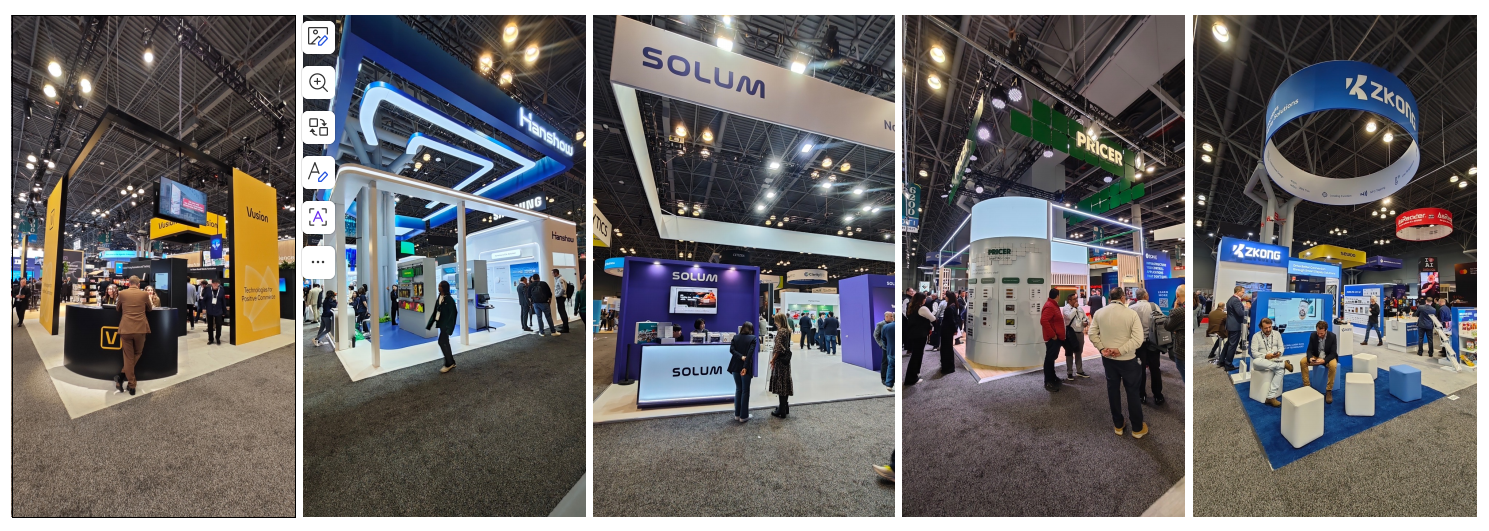
Among the 25 e-paper-related exhibitors at NRF 2026,12 are mainland Chinese enterprises, accounting for 48%; in the core track of electronic shelf labels (ESL), of the 15 manufacturers, no fewer than 9 are from Chinese Mainland, taking up a 60% share, with brands including Hanshow Technology, Hangzhou Zhikong and Fuzhou Sifei forming a formidable "Chinese camp".
Among the other exhibitors, South Korea and Europe each account for 4, the US, Taiwan, China each 2, Japan 1, the global differentiated competition landscape is clear.
In addition, 8 out of the 15 ESL exhibitors at NRF are members of industry alliances, highlighting the clear trend towards standardized and regulated development in the sector.
Product Innovation: Dual breakthroughs on the consumer and retail fronts, with continuous expansion of scenario boundaries
The two exhibitions respectively focus on the consumer end and the commercial end, where e-paper products present a diversified trend of "core categories taking the lead and cross-border innovations emerging", with technological applications extending from single functions to full-scenario coverage.
Consumer Electronics (CES): Large-sized colorful frames become mainstream, and AI + creativity light up life活
Electronic paper photo frames have become a core category at CES. Among the 23 relevant exhibitors, 15 are E Ink electronic paper photo frame vendors, accounting for 65%, with colorization and intelligence emerging as clear upgrade directions.
Apart from core picture frames, a wide array of cross-border innovative categories have flourished.
The exhibition saw the emergence of consumer-grade products such as phone cases, e-book readers, digital notepads, LoRa terminals, and power banks, as well as creative categories like Prism color-changing nails and Prism color-changing walls, and supporting products including indoor photovoltaic cells and electronic styluses.
Among these, the iPolish nail creative product has become a highlight with its unique design, highlighting the market appeal of creative categories and fully unlocking the application potential of electronic paper in personal consumer scenarios.
Retail Sector (NRF): Empowering Businesses with ESL as the Core, Large Form Factor + Collaboration
Electronic Shelf Label (ESL) is a core track at NRF, with 15 exhibitors accounting for a 60% market share, and their products focus deeply on practical features. Companies such as Fuzhou Sifei and Suzhou Yitaile develop products adapted to segmented scenarios, lowering the digitalization threshold for small and medium-sized merchants; Fujian Meisite completes the industrial chain with accessories including brackets and data bars.
This year at the exhibition, e-paper products have broken free from the limitation of being "limited to single price tags". Centering on Spectra6 technology, they present three major features: large-size extension, coordinated development of software and hardware, and full-scenario adaptation.
Large-format signage has been deployed on a large scale: leading vendors including SOLUM and Hanshow showcased products integrating electronic shelf label and advertising functions, featuring both low power consumption and paper-like display advantages, while Samsung and Netronic launched supporting solutions; mid- and small-sized ESLs focus on practical upgrades, with various enterprises rolling out iterative and adaptive products.It further enriches the application forms of large-size electronic paper.
Key Trend: AI Empowerment + Ecosystem Collaboration, Building an End-to-end Value Network
Deep Integration of AI to Enhance Intelligent Experience
In the e-picture frames showcased at CES, AI intelligence has become a core selling point, as AI algorithms optimize content display and interactive experience to make the products better understand users' needs;
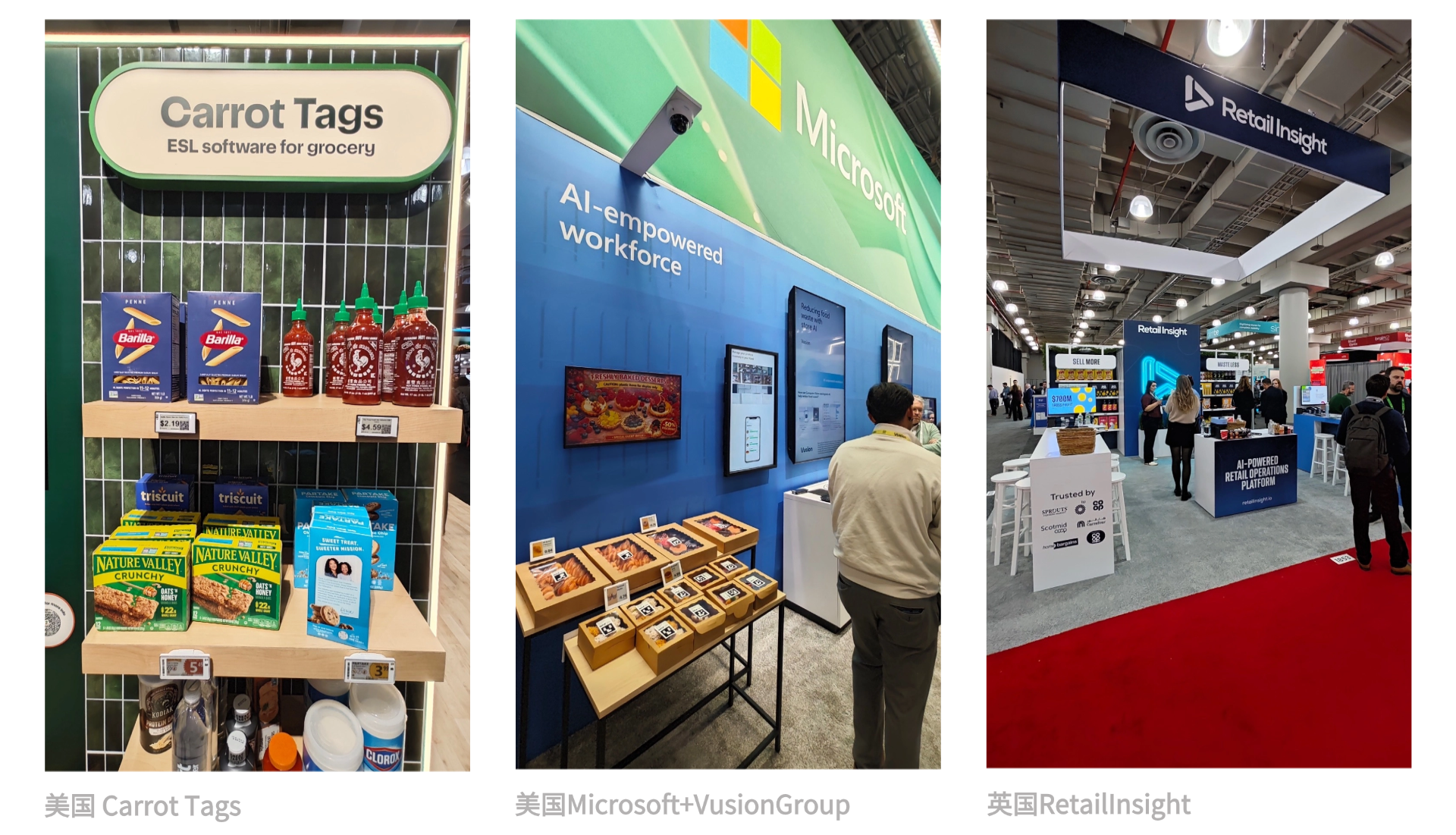
NRF demonstrates the in-depth application of AI in commercial scenarios — the ESL software solution from US-based Carrot Tags, integrating pickup light indication and real-time price tag synchronization functions, has been deployed in supermarket chains including Aldi; RetailInsight from the United Kingdom combines ESL with AI Data Analysis to optimize inventory management and promotion effectiveness; Microsoft partners with VusionGroup to realize real-time linkage between promotion strategies and e-paper terminals via an AI engine, enabling rapid implementation of sales decisions.